
Prime Minister Narendra Modi, in his 80th Independence Day address, expressed strong confidence that India will achieve developed nation status by 2047, urging citizens to embrace big dreams and unwavering resolve to realise 'Viksit Bharat'. He highlighted India's economic transformation and significant growth in various sectors, including defence production, electronic manufacturing, and mobile phone production.

'Every period of excessive optimism eventually gives way to a correction, while periods of extreme pessimism often create the best investment opportunities.'

'India is vulnerable to the West Asia crisis in three ways: Energy costs, the business Indian companies conduct in the region, and remittances from the Indian diaspora.'

As NSRCEL enters its next phase, the incubator plans to focus on AI, deep technology and global partnerships as it looks to expand its reach.

In her address to the nation on the eve of the country's 80th Independence Day, the president stressed that just as government and society remain united to ensure national security, everyone must contribute through joint and concerted efforts to safeguard the present and future of students.

A World Bank report highlights how Artificial Intelligence-powered weather forecasts have enabled small farmers in Telangana, India, to save up to USD 560 by adapting their farming practices to specific risks. The report, "The Promise of Artificial Intelligence," advocates for developing countries to rapidly adopt small, low-cost AI tools to enhance productivity, improve government services, and avoid missing out on the AI revolution.

The challenge thrown by the youth movement creates the opportunity for a more consequential debate on India's economic trajectory because it must remain centered on India's youth as its driving impulse, asserts former foreign secretary Shyam Saran.

A Goldman Sachs report indicates that US and Indian equity markets are becoming less attractive due to lower free cash flow (FCF) yields as valuations rise, while European markets offer significantly higher yields. Concurrently, India's top-listed residential real estate developers experienced a moderation in pre-sales in Q1FY27, attributed to delayed project approvals, limited launches, and high year-ago bases, though underlying housing demand remains healthy.

The Indian economy is expected to be "a little weaker" in 2025 despite steady global growth, IMF managing director Kristalina Georgieva has said. Georgieva also said she expects quite a lot of uncertainty in the world this year mainly around the trade policy of the US. In her annual media roundtable with a group of reporters on Friday, she said global growth is expected to be steady in 2025, but with regional divergence.

Tata Motors Passenger Vehicles (TMPV) reported Q1FY27 results showing significant margin pressures at both Jaguar Land Rover (JLR) and its domestic operations, despite strong volume growth in the India business. Analysts expect these margin headwinds to persist, potentially offsetting gains from increased sales and new launches.

Union Finance Minister Nirmala Sitharaman announced the government's plan to establish a high-powered committee to examine reforms for the banking sector, aligning it with the vision of a 'Viksit Bharat' (Developed India) and India's next phase of growth.

The US senate last week passed a bill that would allow Washington to impose tariffs on major buyers of Russian energy.
India's digital economy is projected to constitute nearly 20 per cent of the nation's GDP by 2030, fuelled by a growth rate twice as fast as the overall economy, according to a senior government official.

New Delhi must look for formal, institutional statements issued directly from Washington rather than rely on casual pronouncements meant for local audiences, notes Ambassador Rajasekhar.

A Parliamentary Standing Committee on Commerce has urged the Indian government to swiftly conclude the proposed India-US Bilateral Trade Agreement (BTA), while ensuring India's interests are protected, recommending complete exemption for key export products like generic medicines and smartphones from future US tariff increases.

Indian benchmark indices Sensex and Nifty surged significantly in early trade, mirroring a global rally and a sharp decline in crude oil prices following the finalisation of a peace deal between the US and Iran to end their 107-day conflict and reopen the Strait of Hormuz.
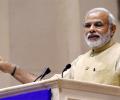
Prime Minister Narendra Modi, in his Independence Day address, highlighted technology and innovation as central to India's goal of becoming a developed nation by 2047. He called for India to lead in emerging technologies like AI, quantum computing, and space, announcing a massive AI skilling initiative for one crore youth. Modi stressed the importance of becoming a global innovation hub, bolstering energy security with nuclear power, and strengthening cybersecurity.

"Our endeavour is to bring headline inflation in line with the target over the medium term," said RBI Governor Sanjay Malhotra, addressing concerns about the central bank's policy stance and economic outlook.

The Asian Development Bank (ADB) has revised down India's GDP growth forecast for fiscal year 2026-27 (FY27) to 6.6 per cent from an earlier 6.9 per cent, primarily attributing the change to elevated energy prices stemming from the Middle East conflict. Despite this moderation, India is still expected to remain the world's fastest-growing major economy.

A new report by EY-Parthenon and CREDAI indicates that Generative AI (GenAI) could inject USD 14-17 billion into India's real estate economy over the next seven years. The technology is expected to significantly enhance operational efficiency, boost sales velocity by 30-50 per cent, and accelerate product launches, offering competitive differentiation and improved customer experiences for developers.

'From day one, our vision has been to build a company that develops and owns the technologies defining the future of space.'

Prime Minister Narendra Modi has called upon India's youth to dream big, assuring them of government support and resources, including a Rs 1 lakh crore Innovation Fund, to bolster the country's burgeoning startup ecosystem and drive its journey towards becoming a developed nation.

Indian benchmark indices Sensex and Nifty rallied in early trade, driven by a significant decline in crude oil prices and positive developments on the geopolitical front, alongside strong performance in blue-chip IT stocks. Track Sensex, Nifty on July 2, 2026

Researchers at IIT Indore have developed a groundbreaking method to convert carbon dioxide and glycerol, two common waste materials, into valuable green chemicals like lactic acid and formic acid in just seven minutes. This low-energy process uses a specially designed ruthenium-based catalyst and microwave heating, offering a sustainable solution for waste management and green manufacturing.

India emerged reasonably well from 2025. But now, the oil shock and war-related supply disruptions have again driven funds out of India and significantly weakened the rupee, points out Ajay Chhibber.

Veteran pacer Bhuvneshwar Kumar has declared himself 'absolutely ready' for a potential recall to the Indian team, including for the World Cup, following spin legend Ravichandran Ashwin's endorsement for his return.

AI-driven job disruption, rising debt, shrinking savings and a changing global economy are reshaping India's middle class. Saurabh Mukherjea discusses jobs, entrepreneurship, investing and the future of India's economic growth on THE REDIFF PODCAST.

'India has initiated a bear market and we will still go lower. It has nothing to do with the economy.'

Indian pacer Prasidh Krishna achieved a historic milestone at Chennai's Chepauk Stadium, taking his maiden five-wicket haul (5/23) in ODIs against Afghanistan. This performance marked the best figures by an Indian bowler at the venue and placed him among an elite group of Indian pacers.

The US push for clearer crypto rules is putting pressure on India to fill its own regulatory gap for virtual digital assets.

The Indian government has clarified that consumers will not be charged for UPI transactions, and most merchant transactions will also remain free. This comes amidst speculation following an amendment to the Payment and Settlement Systems Act, 2007. Any future merchant discount rate (MDR) would be nominal, threshold-based, and aimed at ensuring UPI's long-term sustainability and infrastructure development.

'A favourable base, last year's policy measures, the carryover impact of a good monsoon and improving earnings should all help.'

The Reserve Bank of India (RBI) maintained its key policy rates for the fourth consecutive time, keeping the repo rate at 5.25 per cent, while the benchmark BSE Sensex closed 152 points higher in a volatile session, recovering from an intraday dip.

Foreign investors have aggressively sold off Indian equities, withdrawing over 48,213 crore in the first 10 days of April, following a record 1.17 lakh crore outflow in March, driven by escalating geopolitical tensions in West Asia, rising crude oil prices, and global inflation concerns.

Most members of the Reserve Bank of India's Monetary Policy Committee (MPC) expressed concerns about inflation becoming generalised and highlighted uncertainties surrounding both inflation and growth prospects due to the West Asia conflict, according to the recently released minutes.

SBI Funds Management Ltd. is set to list on stock exchanges next week following its Rs 11,692 crore Initial Public Offering (IPO), which involves an Offer for Sale (OFS) of a 10 per cent stake by SBI and Amundi.

Torn between loyalty to their comrades and disillusionment towards the cause for which they are fighting, they are beginning to cave in. Morale has been the casualty, points out Vice Admiral Biswajit Dasgupta (retd).

'After that the burdens of an ageing population will be upon us, and the share of working age population will shrink.'

Indian economy is in a sweet spot, with a mix of solid growth and moderating inflation, Moody's Ratings said, forecasting a 7.2 per cent GDP growth in the 2024 calendar year and 6.6 per cent in the next. In its Global Macro Outlook 2025-26, the rating agency said the global economy has shown remarkable resilience in bouncing back from supply chain disruptions during the pandemic, an energy and food crisis after the Russia-Ukraine war began, high inflation and consequent monetary policy tightening.

Moody's Ratings has highlighted that Indian banks are among the most exposed in the Asia-Pacific region to the West Asia crisis, primarily due to India's high dependence on energy imports, which could lead to increased inflation, higher interest rates, and strained borrower cash flows.
